Use a mood board to agree on the visual direction; use a 3D walkthrough to review how that direction fits the venue. They solve different problems, so the practical choice for many events is to use a mood board first and develop the approved concept in 3D.
What question does a mood board answer?
A mood board gathers references for colour, materials, floral style, furniture and atmosphere. It helps a client and designer decide what the event should feel like before detailed spatial work begins. It is useful while the concept is still flexible and the venue layout is not the main decision.
A board is not a measured plan. It does not confirm that an arrangement fits a room, that a stage is visible from every seat or that a feature can be built as shown.
What question does a 3D walkthrough answer?
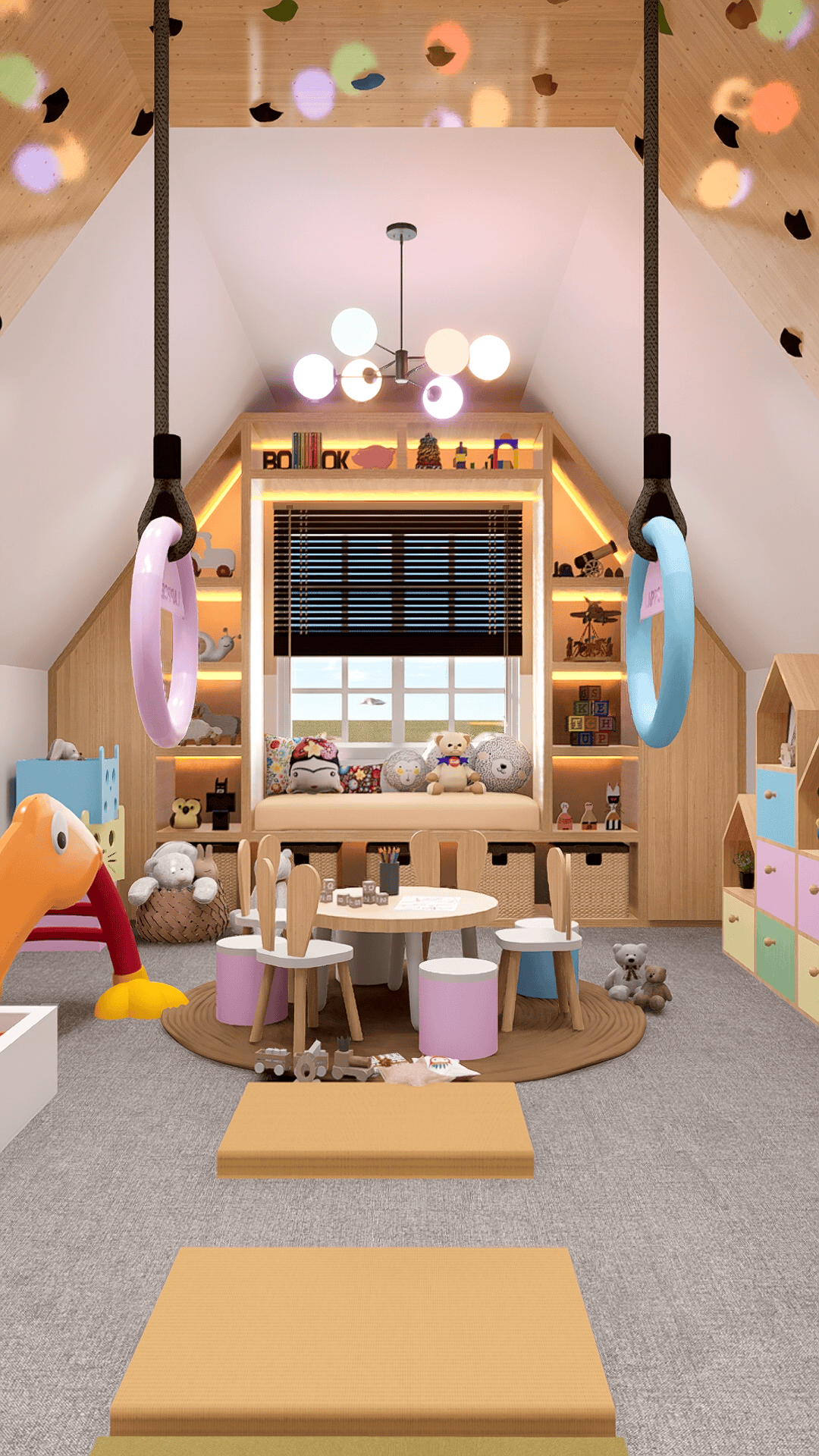
A 3D model places proposed elements inside a venue representation. Stills can show selected viewpoints; an animation can guide the viewer through a planned route. This helps reviewers discuss scale, placement, sightlines and the relationship between areas using a shared spatial reference.
Its usefulness depends on input quality. Treat unverified measurements, furniture sizes, lighting and venue restrictions as assumptions until the responsible team confirms them.
Which one should you choose?
- Choose a mood board when the main question is style, palette or overall atmosphere.
- Choose a 3D preview when the main question is how the concept fits a particular room or how guests might move through it.
- Use both when the project needs agreement on both visual direction and spatial decisions.
Why use them in that order?
Agreeing on a direction first gives the 3D work a clear brief. The designer can then spend time testing the approved idea in the space instead of modeling several unapproved styles. If the venue or layout is already fixed and spatial questions are urgent, the team can begin with a rough blockout while the visual direction is being refined.
Common questions
Does a walkthrough replace a floor plan?
No. A 3D view helps people interpret a design, while a dimensioned floor plan communicates measured positions and clearances. Production and venue teams may need both, plus technical drawings.
Is a mood board less professional?
No. It is the right tool for early art direction. Problems arise only when a mood board is treated as proof that a layout, scale or technical detail will work in a specific venue.
Which option costs less?
Scope and provider determine price. A mood board usually covers a different, earlier decision than a venue-specific model or animation, so compare deliverables and revisions rather than assuming the two are interchangeable.
In short
- Mood board: agree on look and feel.
- 3D walkthrough: review spatial fit and viewpoints.
- Use them together when both creative direction and venue fit need approval.
Planning an event?
Share your venue and brief and we will show you the design in 3D before anything is built.
Discuss your project