

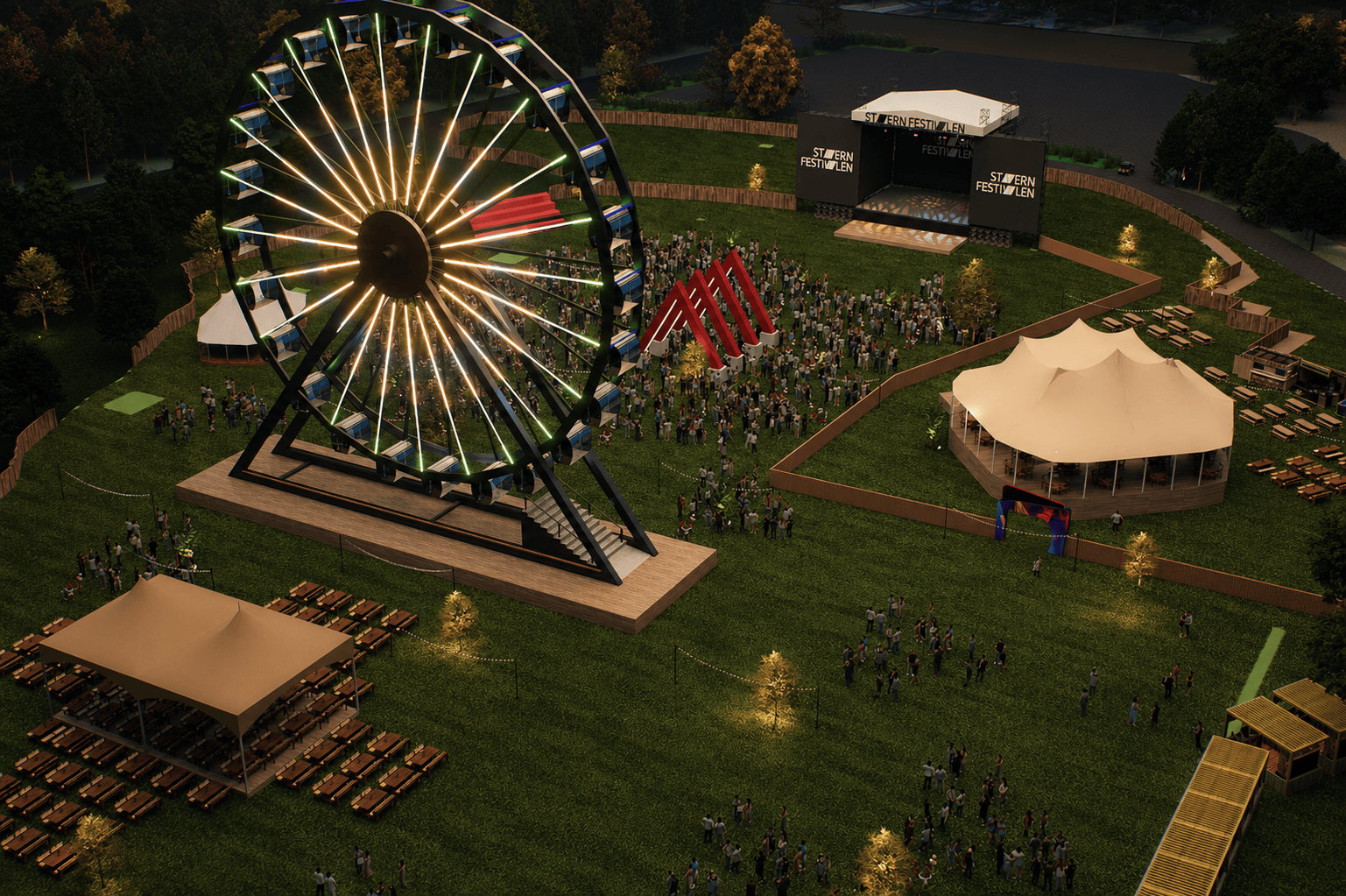
Daylight changes the amount and direction of light entering a venue; after sunset, the event depends more on installed and production lighting. Compare the actual event time, window conditions, room lighting and task needs in context. A 3D preview can help communicate proposed lighting moods, but final levels and equipment must be checked on site with the lighting and venue teams.
Why does the same venue look different at different times?
Natural light shifts with time, weather, window orientation and shading. It can change the apparent brightness and colour of surfaces, while artificial fixtures add their own colour, direction and intensity. As a result, a palette or focal point that reads clearly in one condition may look different in another.
What lighting should an event plan consider?
- Ambient light provides the general level of illumination in the room.
- Task light supports activities that need visibility, such as registration, dining or workshops.
- Accent light draws attention to a stage, feature wall, table or architectural detail.
These are planning categories, not a substitute for a lighting plot. Fixture choice, aiming, controls, power, rigging and safe installation should be coordinated by the appropriate production professionals.
How can you compare a daytime and evening setup?
Start with the event schedule and venue information. Note the room orientation, window locations, existing fixtures, blackout options, stage and screen positions, and any photography or presentation needs. Review at least two scenarios if the start time is undecided: the expected daylight condition and the after-dark condition.
In a 3D review, keep the venue and layout constant while changing the lighting assumptions. This makes it easier to compare atmosphere, focal points and broad colour relationships. Treat rendered brightness and colour as illustrative: screens, display settings, real fixture output and daylight conditions can differ from the final image.
Why does event purpose matter?
A presentation needs clear attention on speakers and screens; a dinner may need comfortable table visibility; a reception may prioritize an inviting atmosphere and wayfinding. One room can need several lighting states across the schedule, so plan transitions rather than choosing only a single “day” or “night” look.
Common questions
Will a 3D render show the exact real-life lighting?
No. It can communicate a design intent and compare scenarios, but a render is not a photometric measurement or a guarantee of final appearance. Confirm equipment, control and levels with the lighting team, and arrange a venue test where needed.
Should I choose the colour palette before the lighting?
Choose them together where possible. The same material or colour can appear different under changing light, so review important combinations in the expected conditions and confirm physical samples when colour accuracy matters.
What if the event crosses sunset?
Ask the production team to plan distinct lighting states and a transition. A daytime look, dusk transition and evening look may each need different settings and operational cues.
In short
- Plan around the event schedule and actual venue daylight conditions.
- Balance ambient, task and accent lighting against what guests need to see and do.
- Use 3D to compare intent, then verify real equipment and conditions on site.
Planning an event?
Share your venue and brief and we will show you the design in 3D before anything is built.
Discuss your project